ART IN STORE
SHANGHAI
Massimo Dutti presents in Shanghai the pop-up The Order of Things, created in collaboration with architect Xie Ke and located in the historic One Xintiandi building. This iconic 1920s space, formerly an intellectual salon, provides a unique cultural context to the project.

( 01 )
THE
ARTIST
To define the spatial identity of the pop-up, Massimo Dutti collaborates with architect Xie Ke, known for his minimalist and poetic language that fuses Eastern philosophy with modernity. His pieces, specifically selected for this project, introduce an Asian sensibility that harmonizes with the European sobriety of the brand. Through the interaction of light, shadow, natural materials, and refined forms, Xie Ke creates an atmosphere of calm and aesthetic depth. Several of his emblematic, sculptural pieces reinforce the spatial narrative and the designer’s distinctive signature.
( 01 )
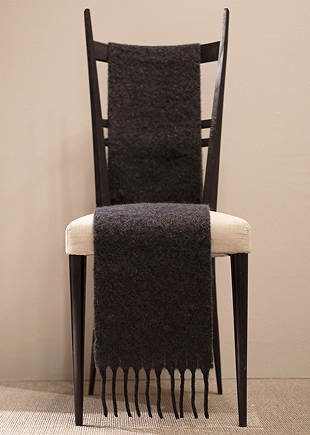
“Model 689 Chair”
A French piece from the 1960s originally designed for Ligne Roset. Its tall, slender backrest in dark wood adds elegant verticality, contrasting with the softness of the neutral-toned upholstered seat. The piece combines visual lightness and sculptural strength, perfectly representing Xie Ke’s sensibility in integrating historical references of Western design within a contemporary and poetic language.
( 02 )
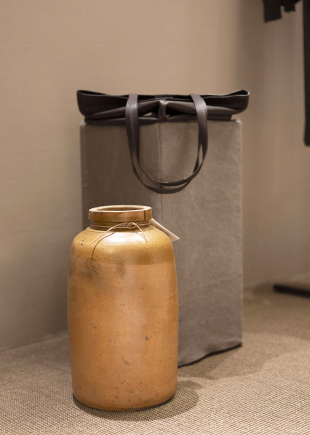
Vessel
A hand-molded clay vessel presides over one of the spaces with a silent, almost ritual presence. Its soft curves and the natural texture of the clay embody the pursuit of beauty in pure simplicity.
( 03 )
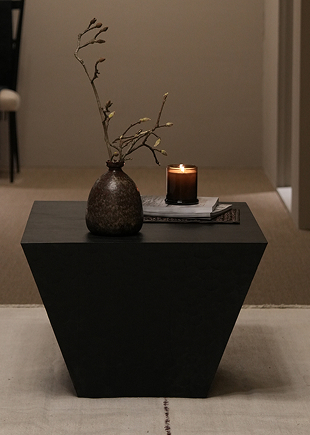
Sumatran Side Table
Crafted in black oak, this side table features a deep, textured black finish with hand-carved details. With a minimalist yet distinctive silhouette, the textured surface not only adds visual depth but also highlights the exquisite craftsmanship behind its creation.
( 04 )
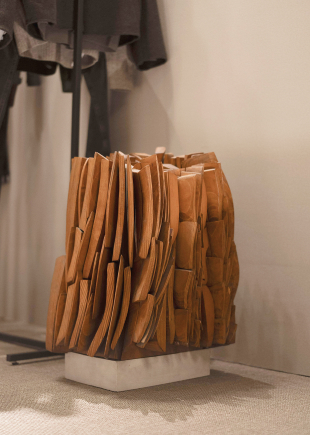
Sculpture “Monumento”
Created by Michel Berard in 1980, the wooden sculpture Monumento is made of layered and staggered wooden components: each element features varying lengths and angles, forming a rhythmic three-dimensional structure with no intricate decorations. The surface retains the natural grain of the wood, with visible hand-chiseled marks; the piece is mounted on a white base and displayed on a presentation platform.