My Gaudí.
The Biography Written by His Friends.
By Chiara Curti
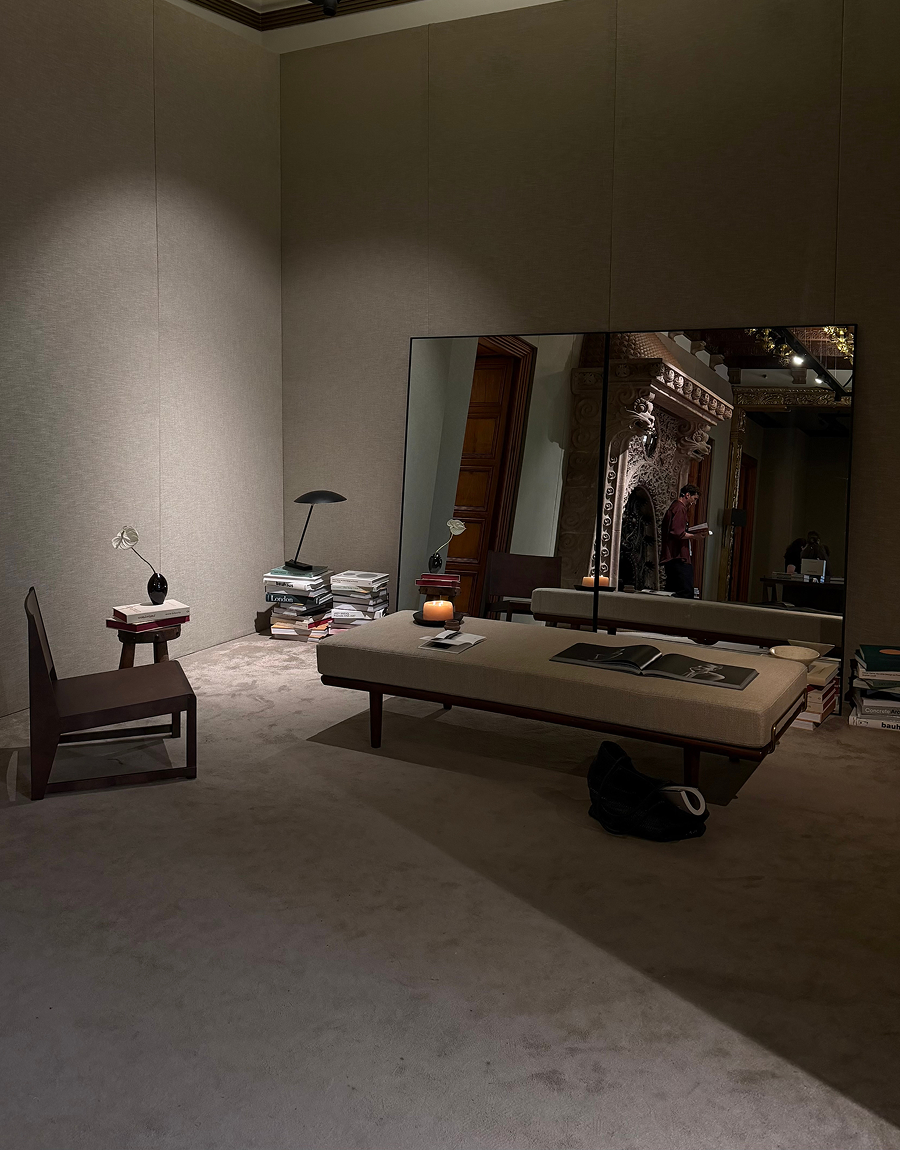
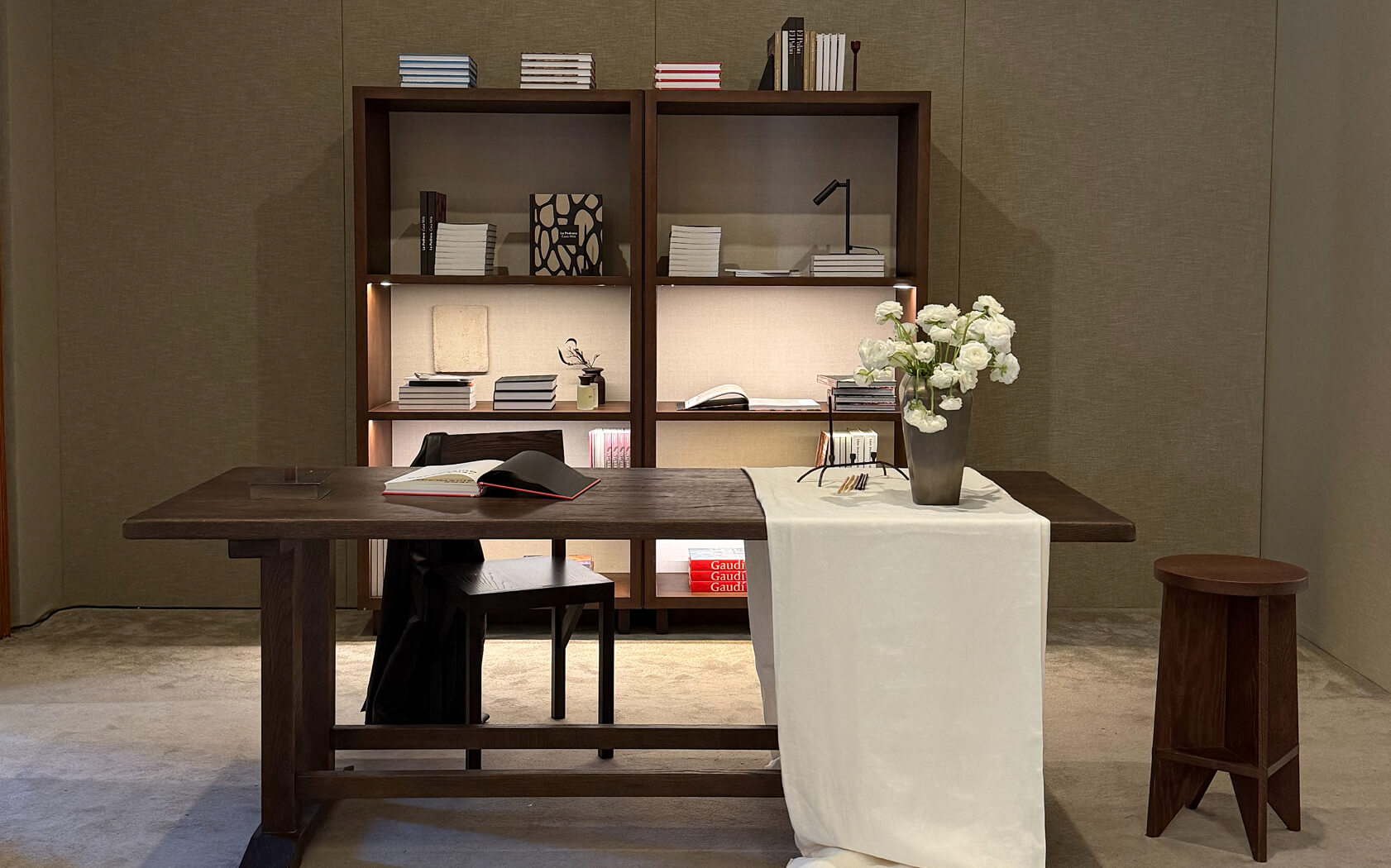
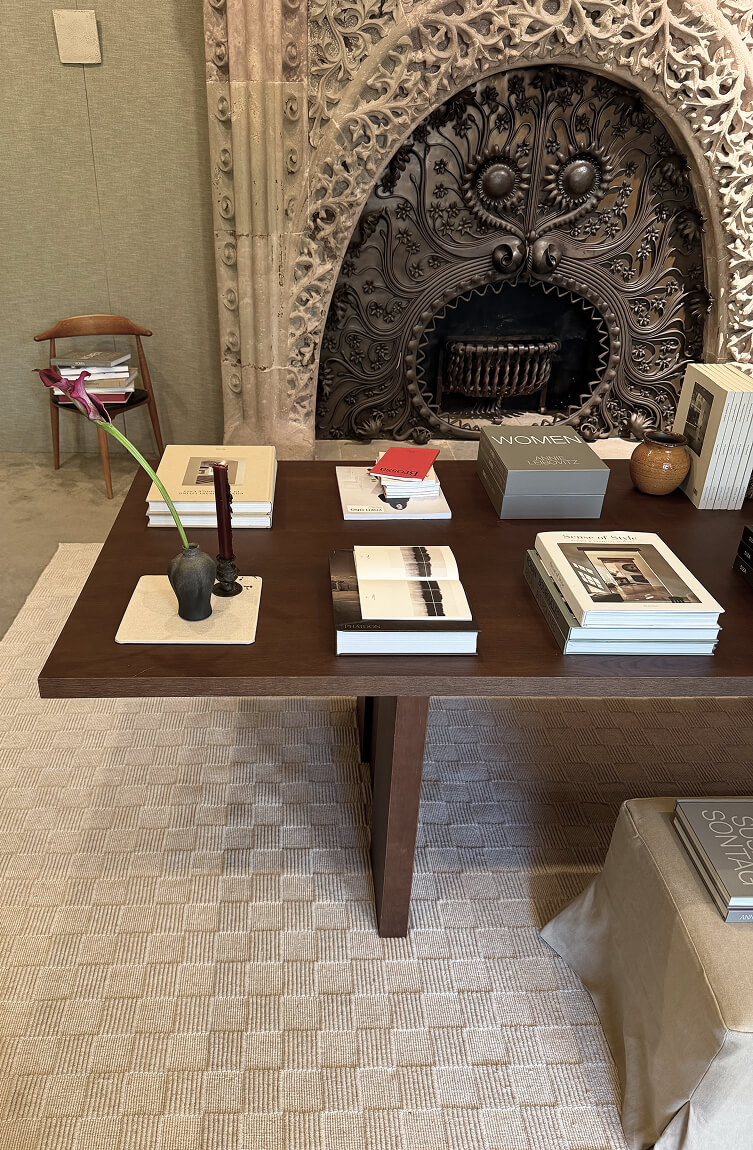
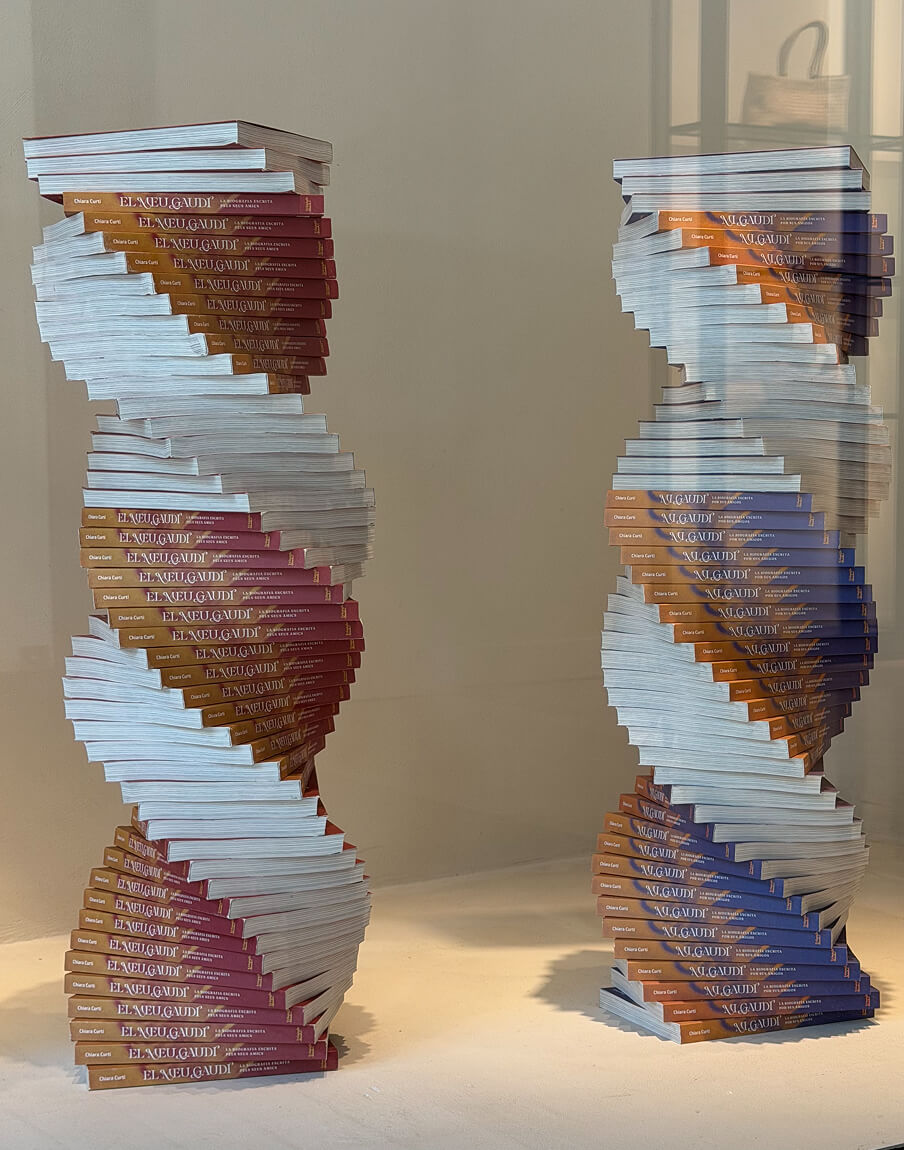
On the occasion of Book Day, the store at Paseo de Gracia 98 hosted the signing of My Gaudí. The Biography Written by His Friends, in the presence of its author, Chiara Curti. The gathering, conceived with a sense of closeness, was accompanied by readings of selected passages from the work, creating an intimate atmosphere that allowed for a deeper immersion into a more personal and collective vision of Gaudí’s figure. In this context, we spoke with Curti about the origin of the project, her research process, and the way this book proposes a different approach to the architect’s legacy.
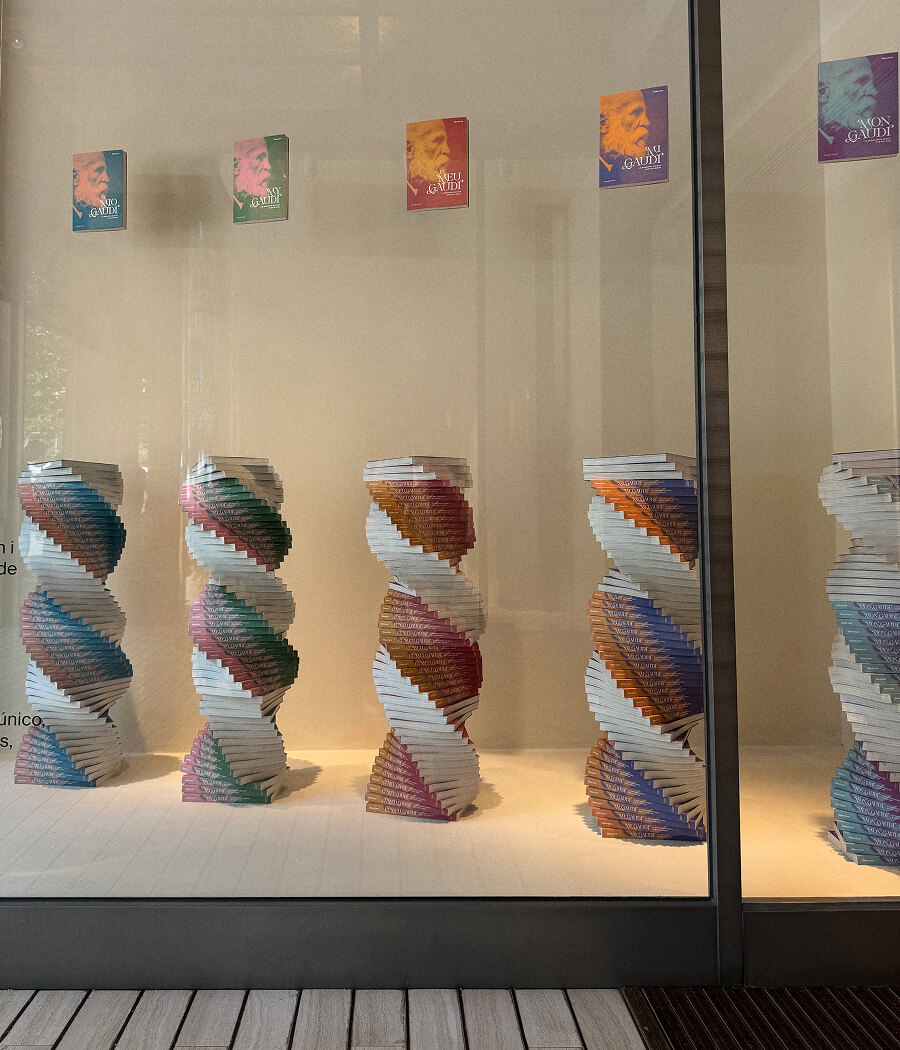
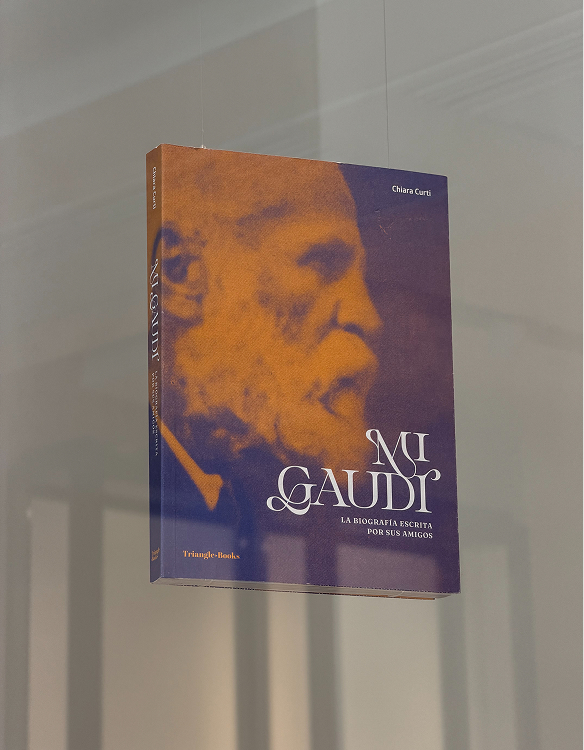
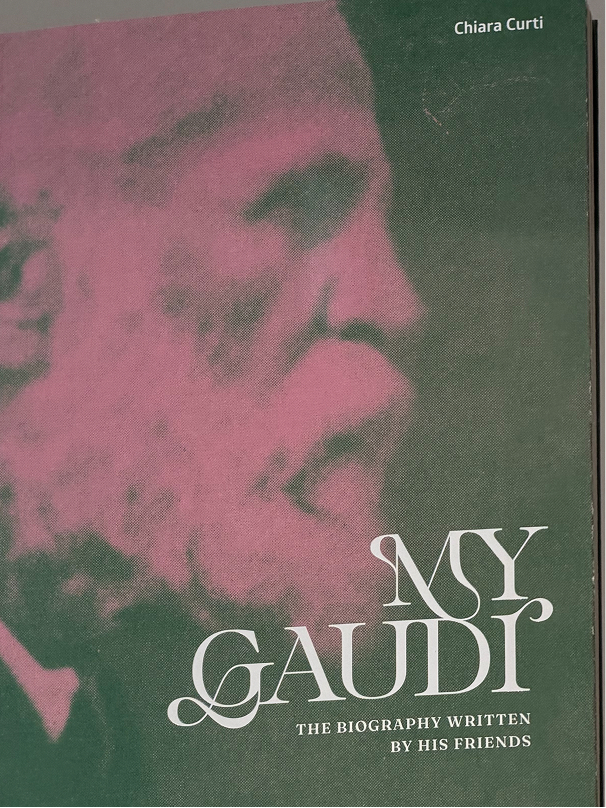
Chiara Curti, architect and PhD in Art History, is a specialist in Gaudí and his work, and has worked as an architect on the crypt and the Nativity façade. Her book, My Gaudí. The Biography Written by His Friends,
is a collective and unprecedented narrative that reconstructs the life of Antoni Gaudí through the voices of those who knew him. Based on letters, memories, and forgotten testimonies, Chiara Curti draws an intimate and close portrait of the master. It is not a biography from the outside, but from the heart of his daily life. Each testimony is a window that reveals the man behind the genius. The texts are original and have been preserved as they were written, with their liveliness and emotions intact. A unique biography, made of stories, perspectives, and living memory.
In My Gaudí, you propose a very particular view of the architect through the voices of those who knew him. What led you to choose this collective approach instead of a traditional biography?
I have carried out many studies on Gaudí, but one unusual fact has always caught my attention: his first biographers were not only critics, architects, and art historians, but also his friends. In their writings, they could never separate the personal experience of having known someone who had marked their lives from his work.
It is an unusual method in a world where, when speaking about art, one does not speak of feelings, nor is the physics that keeps buildings standing mixed with anecdotes about the course of a day or the experience of a worker. They did so because they loved Gaudí—they were his friends. And if one loves a person—like a mother speaking about her child—one cannot avoid talking about who they are alongside what they do.
This method, in fact, allows one to know a person more deeply. Although my academic work required me to set aside this type of information, which apparently is not useful for architecture, I realized it helped me understand Gaudí better, because I came to know him through love. I felt I could not keep this way of knowing him to myself, and I imagined this sui generis biography, where his friends write and I step aside, preparing introductions for each of them.
Gaudí is a widely studied and mythologized figure. What new or lesser-known aspects have you discovered through the testimonies of his contemporaries?
What impressed me most is that these testimonies restore a human depth to Gaudí that is sometimes lost in mythification. He appears as a man deeply attentive to individuals, capable of listening, changing, and being affected by those around him. He was not only a creator of extraordinary forms, but someone who lived in relationship.
His way of working also emerges strongly. Gaudí did not conceive architecture as the mechanical execution of a finished idea, but as a living, open process in dialogue with artisans, workers, collaborators, priests, patrons, and friends. This helps explain why his work is not repetitive. Each building responds to unique human, spiritual, and material circumstances.
Another lesser-known aspect is his humility. Many testimonies portray a man aware of the greatness of the work, yet not driven by self-assertion. This reshapes the image of the modern “genius.” In Gaudí, greatness does not arise from isolation, but from obedience to reality.
“
What impressed me most is that these testimonies restore a human depth to Gaudí that is sometimes lost in mythification
“
During your research process, was there any anecdote or story that changed your personal perception of Gaudí?
More than a single anecdote, it was decisive to discover how those who knew him spoke of him with gratitude and affection. That deeply changed my perception. I studied Gaudí as an architect, but they compelled me to see him as a man. And I understood that, in his case, these two dimensions cannot be separated.
I was especially struck by how, in seemingly small memories—a gesture, a conversation, an observation in the workshop or on site—a whole way of being in the world was revealed. In those minimal fragments, a sober, attentive, demanding, yet approachable man emerged. Sometimes the truth of a person is not revealed in great events, but in small details that sustain an entire life.
The book reflects not only the creative genius but also the man. How would you describe the balance between these two facets in his work?
Gaudí’s creativity is not that of a genius isolated in his studio, reflecting alone on his ideas. It begins in relational life. Gaudí always lives in relation—and from this way of living, he creates.
This is why each of his works is so different: at every moment, he is in dialogue with a unique person, a specific circumstance, a particular need. In him, there is no separation between the man and the creator. The artist does not erase the person, but is born from it. That is precisely why his architecture is so powerful—because it is permeated by life.
In a city like Barcelona, where Gaudí’s presence is so strong, do you think there are still aspects to reinterpret or rediscover about him?
There is still so much to study. Gaudí was not only a genius; he was also an inspired man. Perhaps that is why his work remains so fascinating—it has many layers of interpretation. Each generation believes it has fully understood him, but Gaudí always opens up again, always calls for a new perspective.
Moreover, there is still much documentation to be explored. Barcelona should be a reference not only as the place where his works can be seen, but also as a center for study, research, and reflection on Gaudí. Hopefully, it will attract more and more researchers in this regard. That would be a more just and fruitful way of preserving his legacy.
What do you hope readers will take away after reading My Gaudí? A new image of the artist, a more human connection, or perhaps both?
My Gaudí is a work in which a friend introduces you to their friend. I hope the reader becomes part of that circle of friendship and, in turn, comes to feel like a spiritual friend of Gaudí. That has been my wish.
“
What impressed me most is that these testimonies restore a human depth to Gaudí that is sometimes lost in mythification
”