Luz Moreno Pinart
Luz Moreno Pinart’s collaboration in the Art in Progress project in Saint-Tropez highlights her distinctive material research practice.
Luz Moreno Pinart
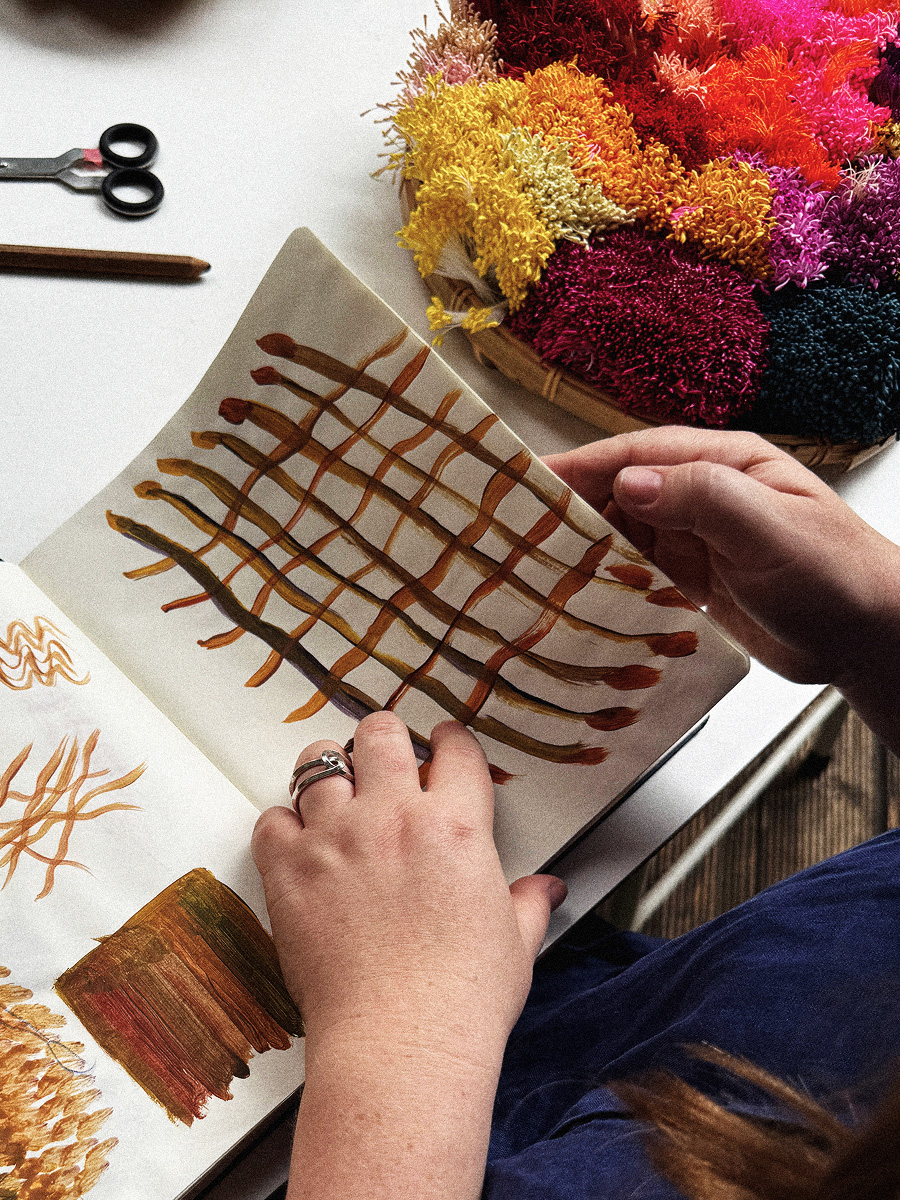
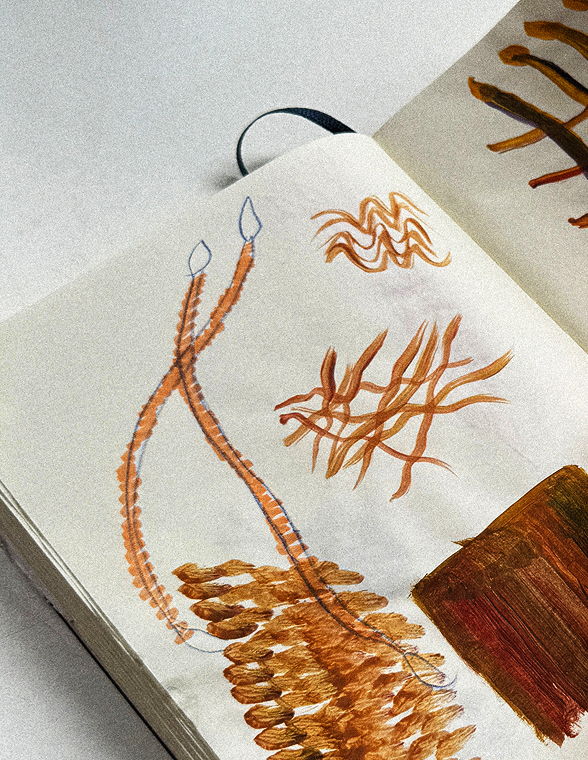
Research Notebook
Luz Moreno Pinart is an artist and researcher whose practice exists at the intersection of design, craftsmanship, and material exploration. Her work investigates natural fibres through biological, historical, and cultural perspectives, revealing the connections between materials, territory, and memory. Trained in design and scenography, she specialised in textile fibres and further developed her research into edible fibres and their potential within contemporary art.
What was the starting point for this work, and how did the idea evolve throughout the process?
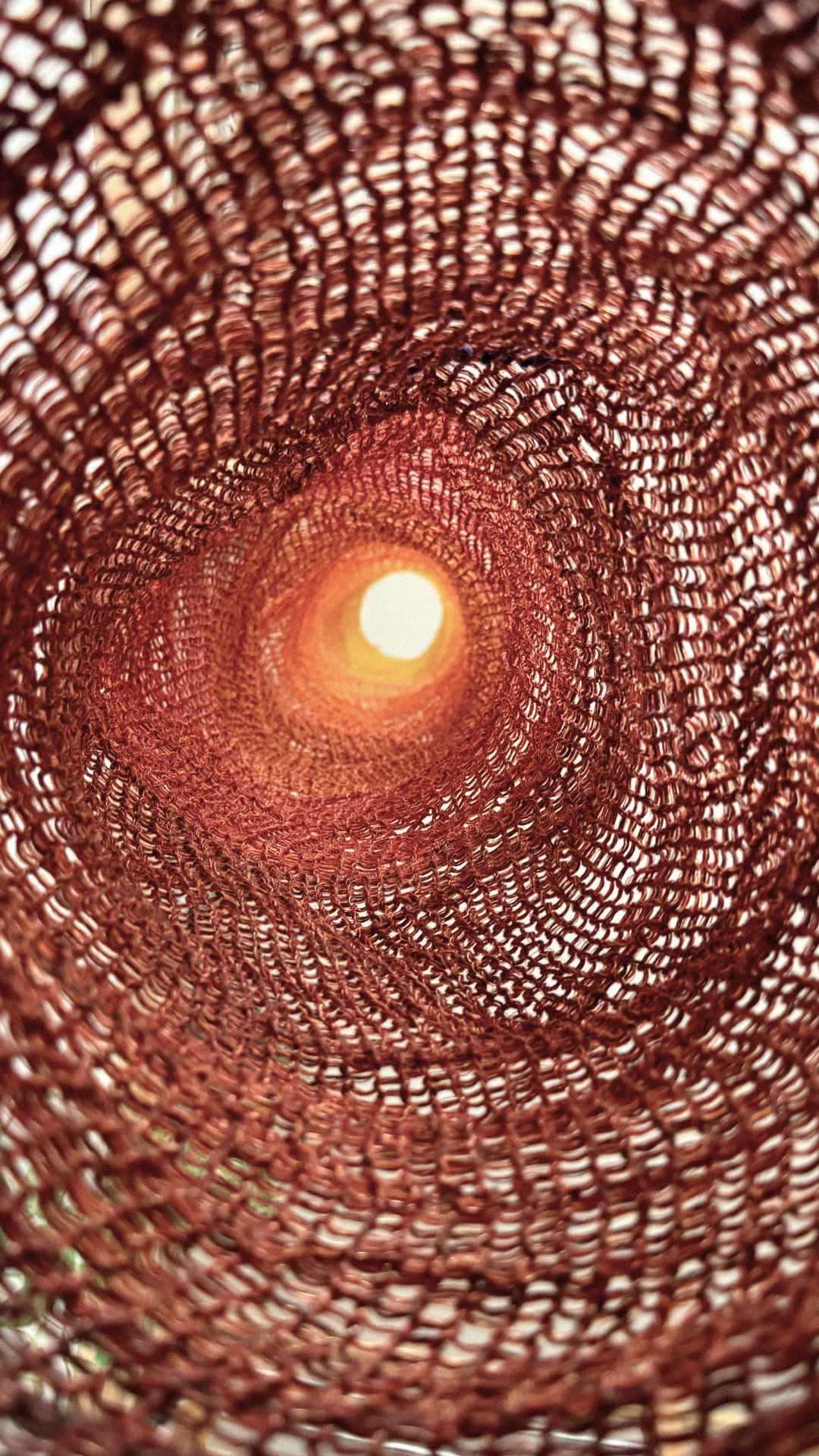
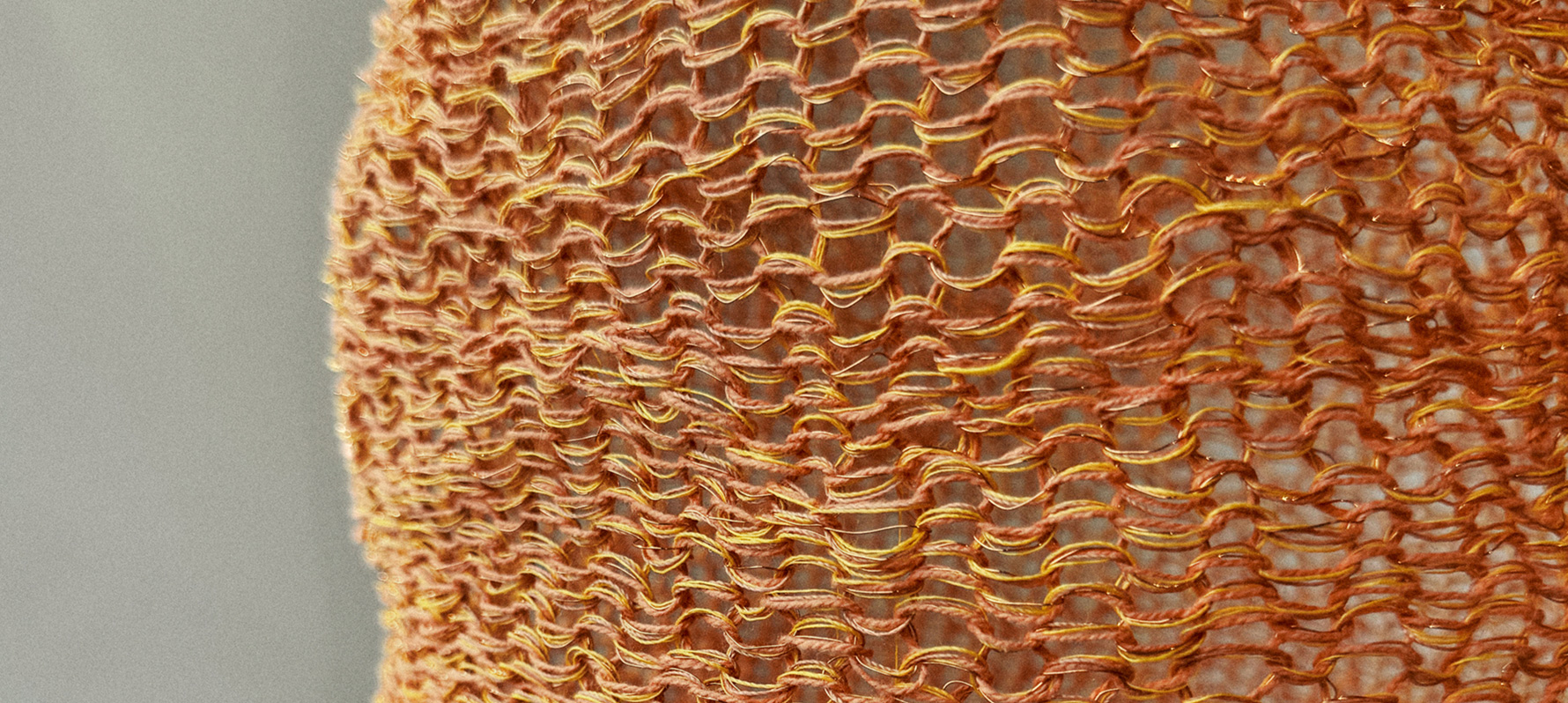
These sculptures were born in Normandy, in a flax field surrounded by nettles, from a reflection on the raw materials of the textile industry. I was fascinated by the relationship between these two fibres and began researching their historical, biological, and technical dimensions. I was immediately drawn to the nettle’s rhizomes and the way they communicate. This inspired me to start weaving flax and nettle threads together. While working in the field, local farmers told me that copper had once been used as an insecticide. I decided to incorporate copper thread into the weave, and it was at that moment that the sculptures truly came to life.
You often allow materials to guide part of the creative process. Was there a moment when the material led you somewhere unexpected during the creation of this work?
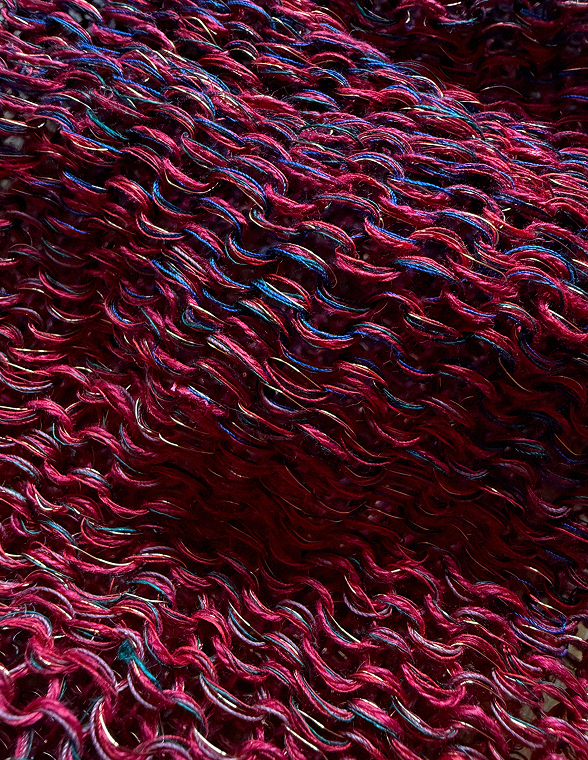
When I first observed nettle and flax under a microscope, I was struck by the complexity of colours that made up these fibres. This became the defining factor for the sculptures’ colour palette; I chose to work exclusively with colours already inherently present within the fibres themselves. It felt like a way of honouring the material rather than imposing an external identity upon it. In the end, the colours did not merely cover the sculptures—they emerged directly from the biology of the medium itself.
You often describe yourself as a translator of plants and materials. What story were you hoping to translate through this work?
During my research, I discovered that nettle is actually the oldest and strongest textile fibre in Europe. During the industrial era, attempts were made to cultivate it within strictly controlled plots. However, because nettle is a rhizomatic plant, it grows wherever it chooses, constantly seeking the type of soil it needs. As the industry was unable to domesticate it, flax became the preferred alternative, as it was far easier to manage. This rebellious and nomadic nature of nettle fascinated me, and I decided to translate its story of untamed freedom through these rhizomatic sculptures.
Luz Moreno Pinart
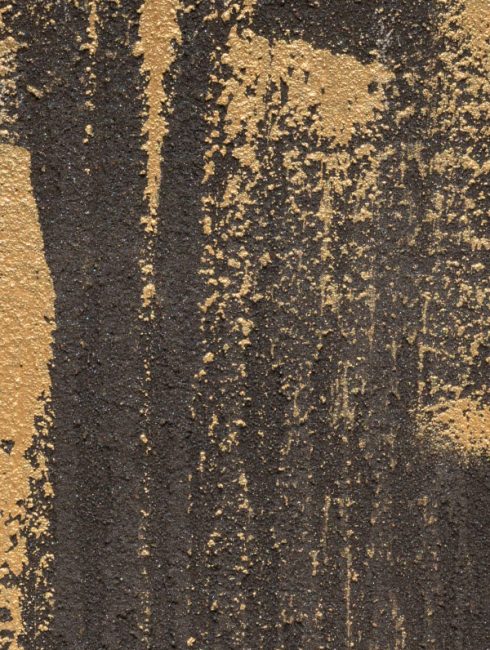
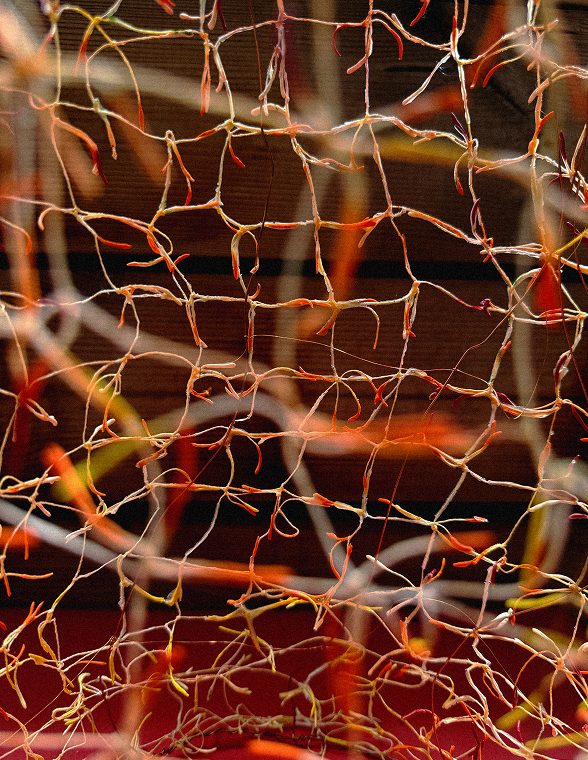
Detail of The Saffron Dance (2025)
“When I first observed nettle and flax under a microscope, I was struck by the complexity of their colours, which ultimately defined the sculptures’ colour palette.”
Luz Moreno Pinart
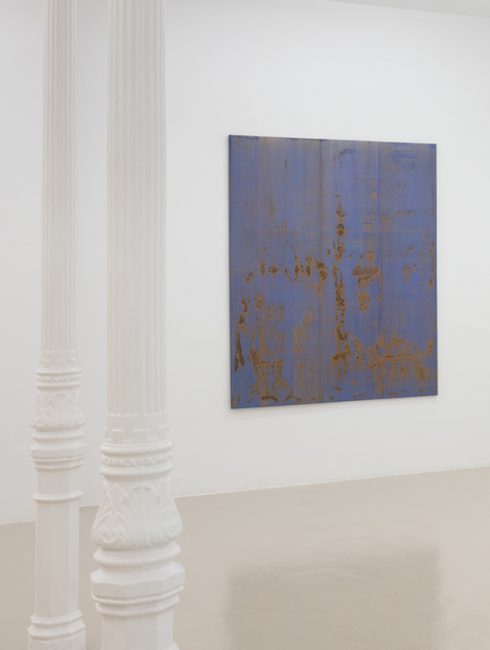
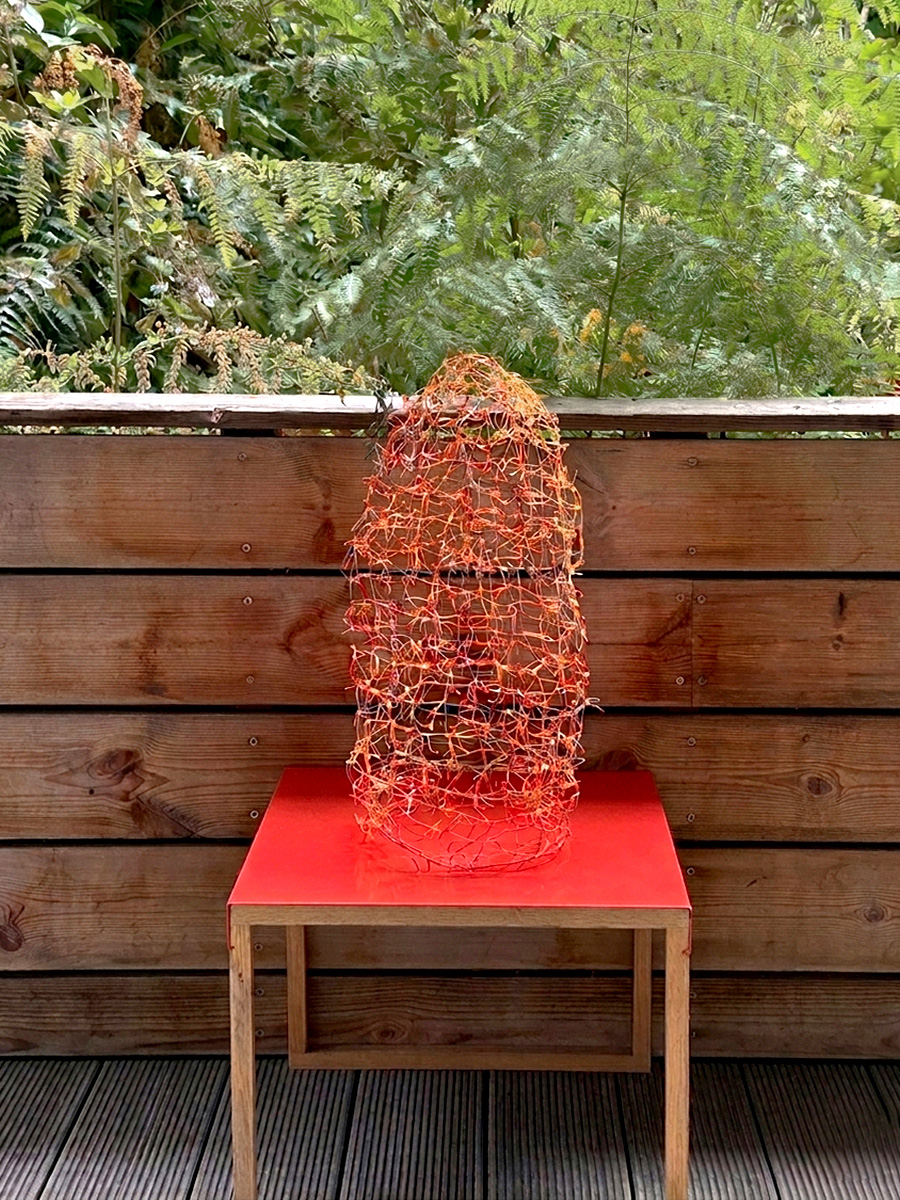
The Saffron Dance (2025)
Luz Moreno Pinart
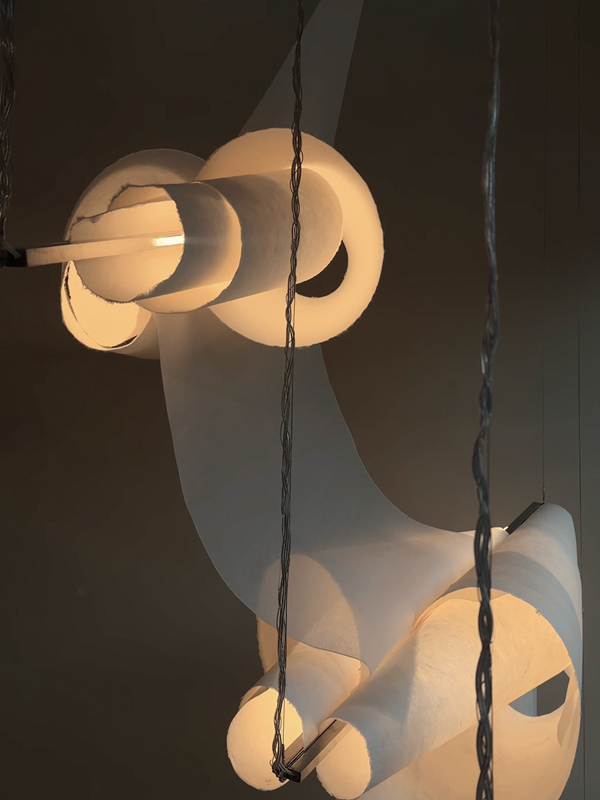
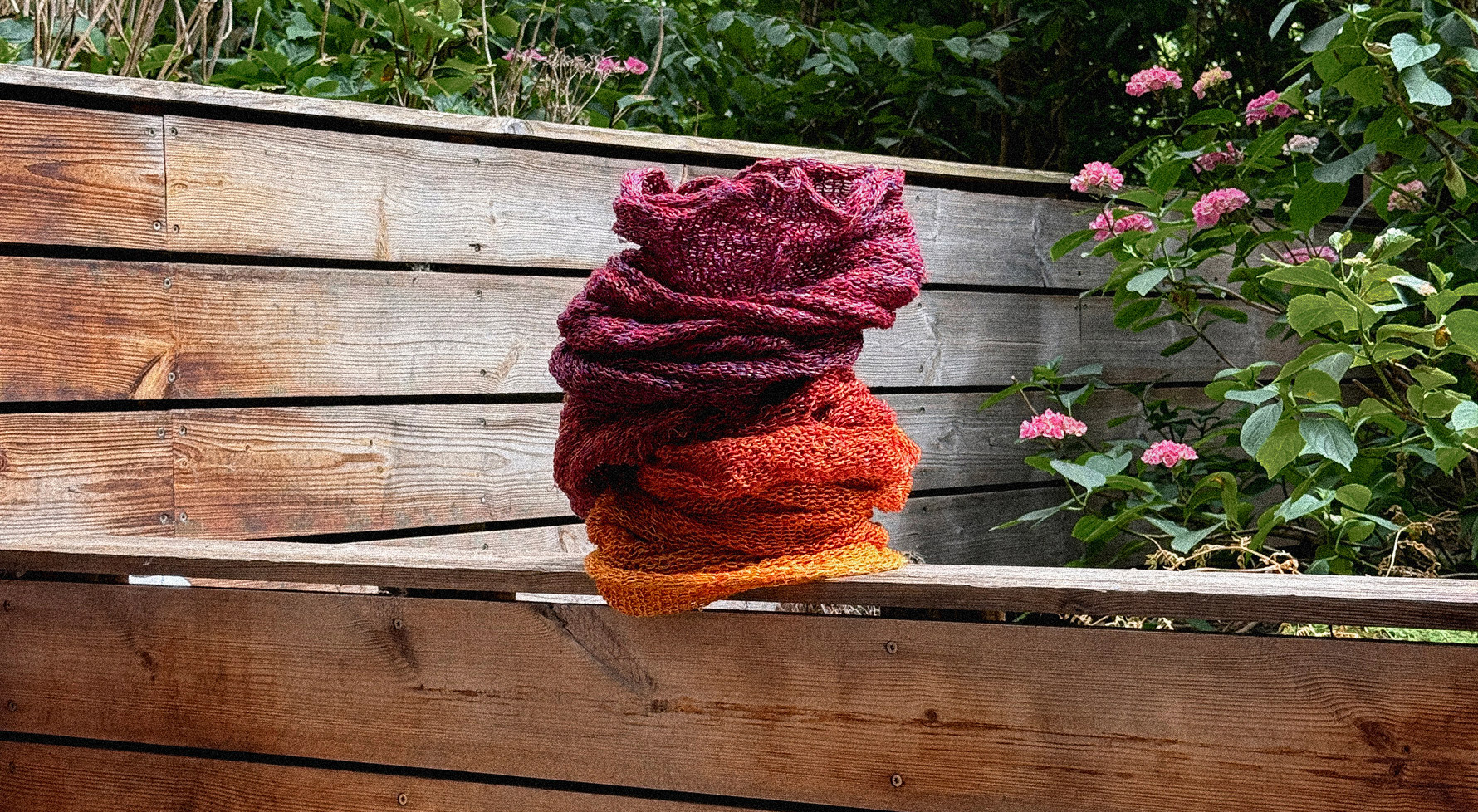
Les hirondelles dansent sous la pluie (2025)
Your work often reveals what remains hidden beneath the surface. What invisible connections are explored in this installation?
This installation explores invisible connections on multiple levels. From a biological perspective, it highlights the hidden world of rhizomes: the secret underground network through which plants communicate, share nutrients, and collectively resist beneath the soil. At the same time, it establishes an invisible connection with time and memory. By intertwining flax and nettle with copper thread, I uncover the hidden agricultural history of that field in Normandy, bringing to the surface the chemical and human traces of the past. The installation reveals that a landscape is never only what we see; it is an invisible tapestry of biology, history, and resilience pulsing beneath our feet.
What did you spend the most time observing during the development of this work?
What I spent the most time observing was the dialogue between the microscopic world and the physical behaviour of the material. I spent countless hours in front of the microscope analysing the anatomy of flax and nettle fibres, fascinated by their hidden chromatic gradations and structural complexity. Later, this visual study evolved into a tactile exploration. I carefully observed how these threads reacted when intertwined with copper wire. It became a lesson in tension and resilience: watching a rigid metal and an untamed plant fibre negotiate their space within the weave until they found their own balance.
Your work often invites us to slow down and observe the invisible connections between things. In your own life, which connections continue to nourish and inspire you today?
In my daily life, I find a constant source of inspiration in my connection with the rhythms of the natural world. Simply pausing to observe the changing seasons or watching a wild plant make its way through the cracks of an urban pavement reminds me of the power of patience. I am also deeply inspired by the invisible threads that connect us to one another: slow and unhurried conversations, the knowledge shared by local farmers and artisans, and the ancestral memory of those who cared for the land before us. In a world that constantly demands speed, cultivating these silent and invisible bonds with the earth and with community is what keeps my curiosity alive and gives meaning to my creative practice.
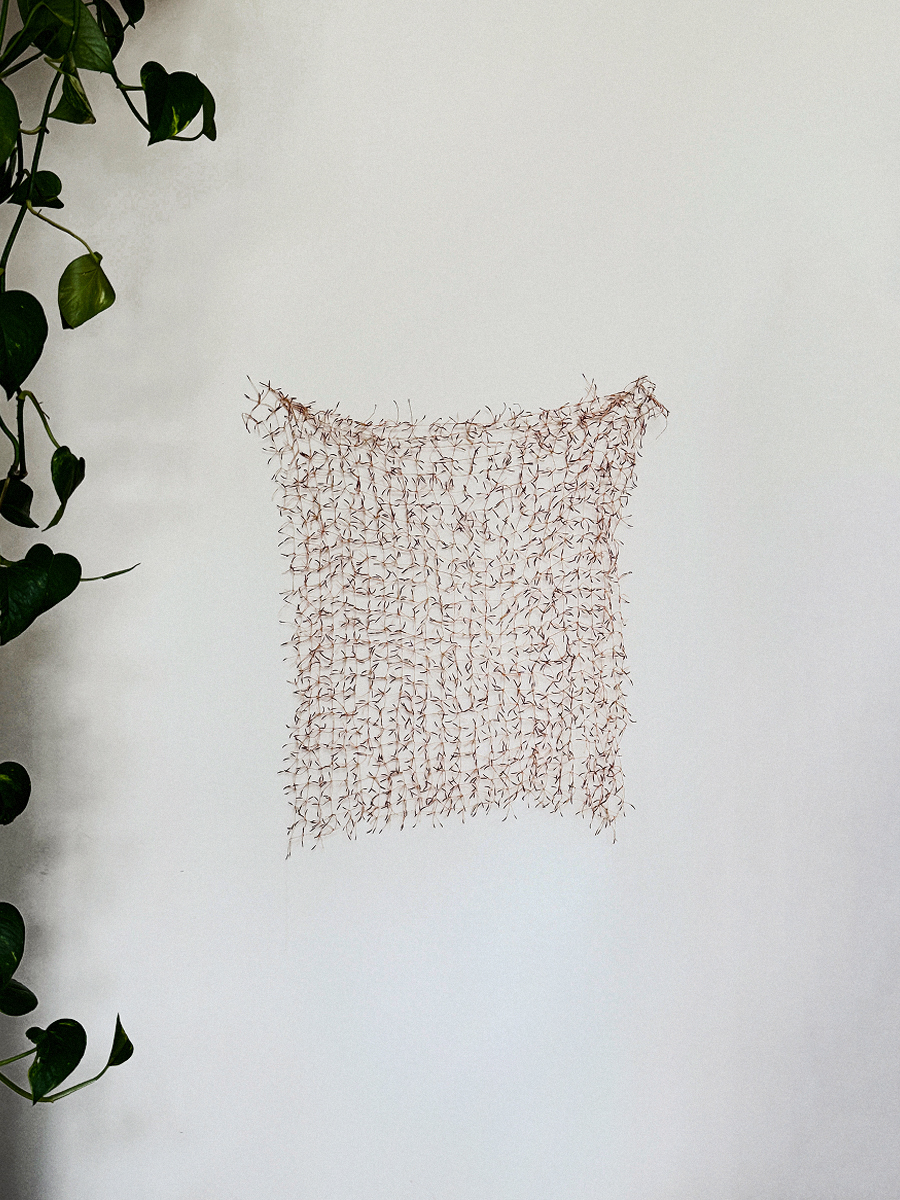
Luz Moreno Pinart
El Retiro
Luz Moreno Pinart
Detail of Les hirondelles dansent sous la pluie (2025)
“In my daily life, I find a constant source of inspiration in my connection with the rhythms of the natural world.”
Luz Moreno Pinart
Detail of Les hirondelles dansent sous la pluie (2025)
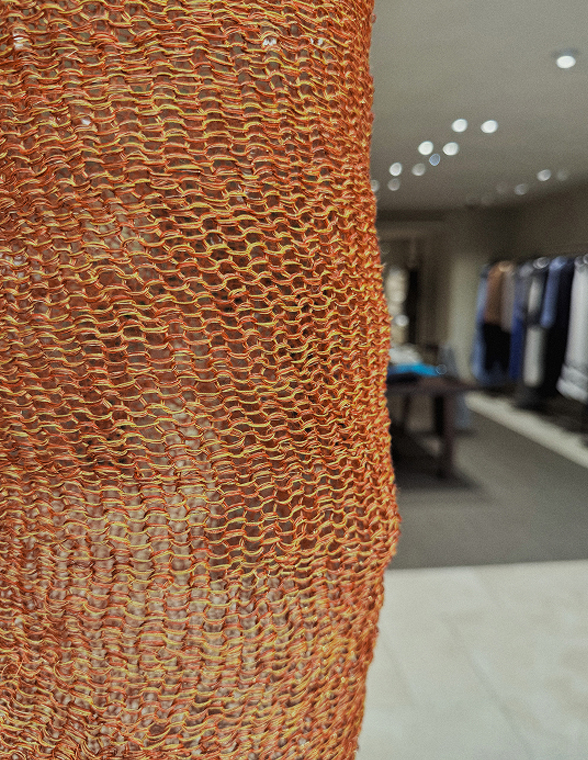
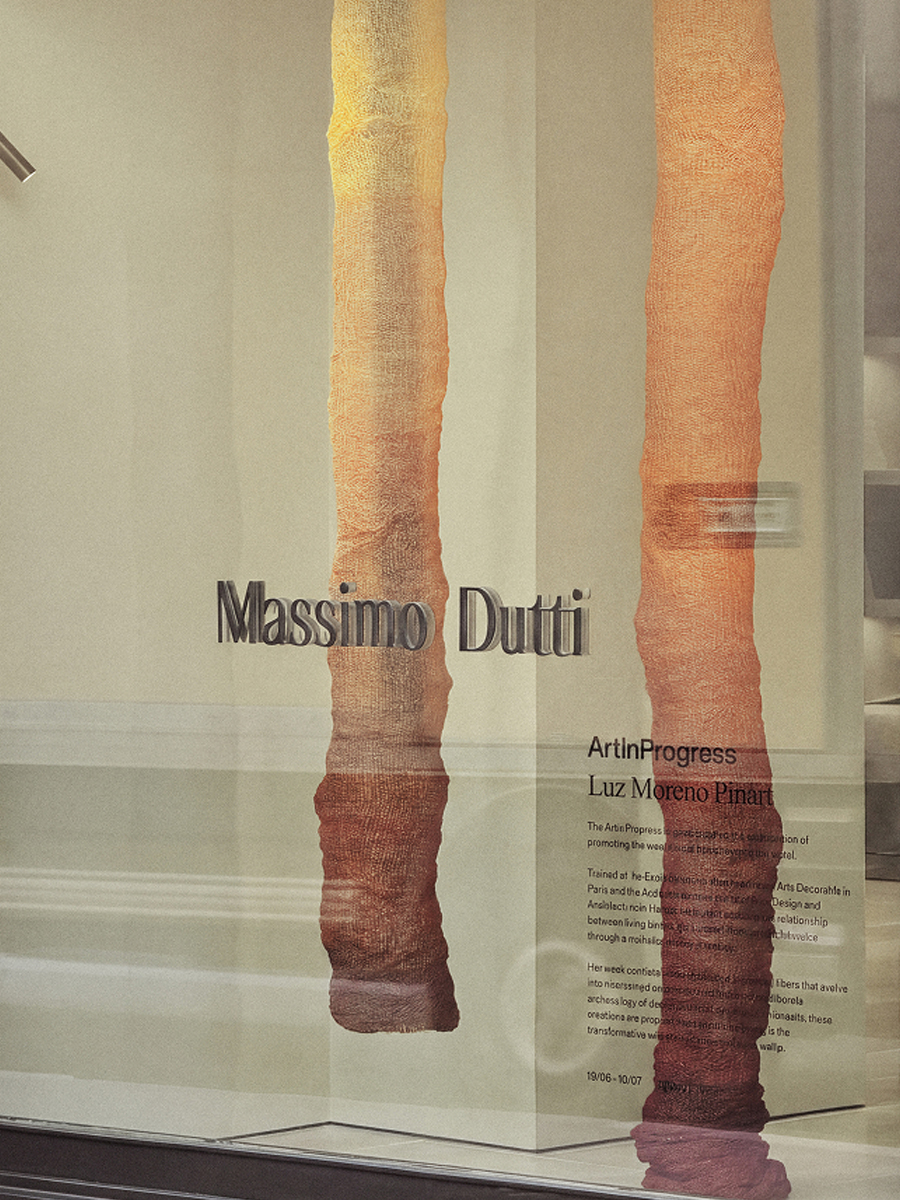
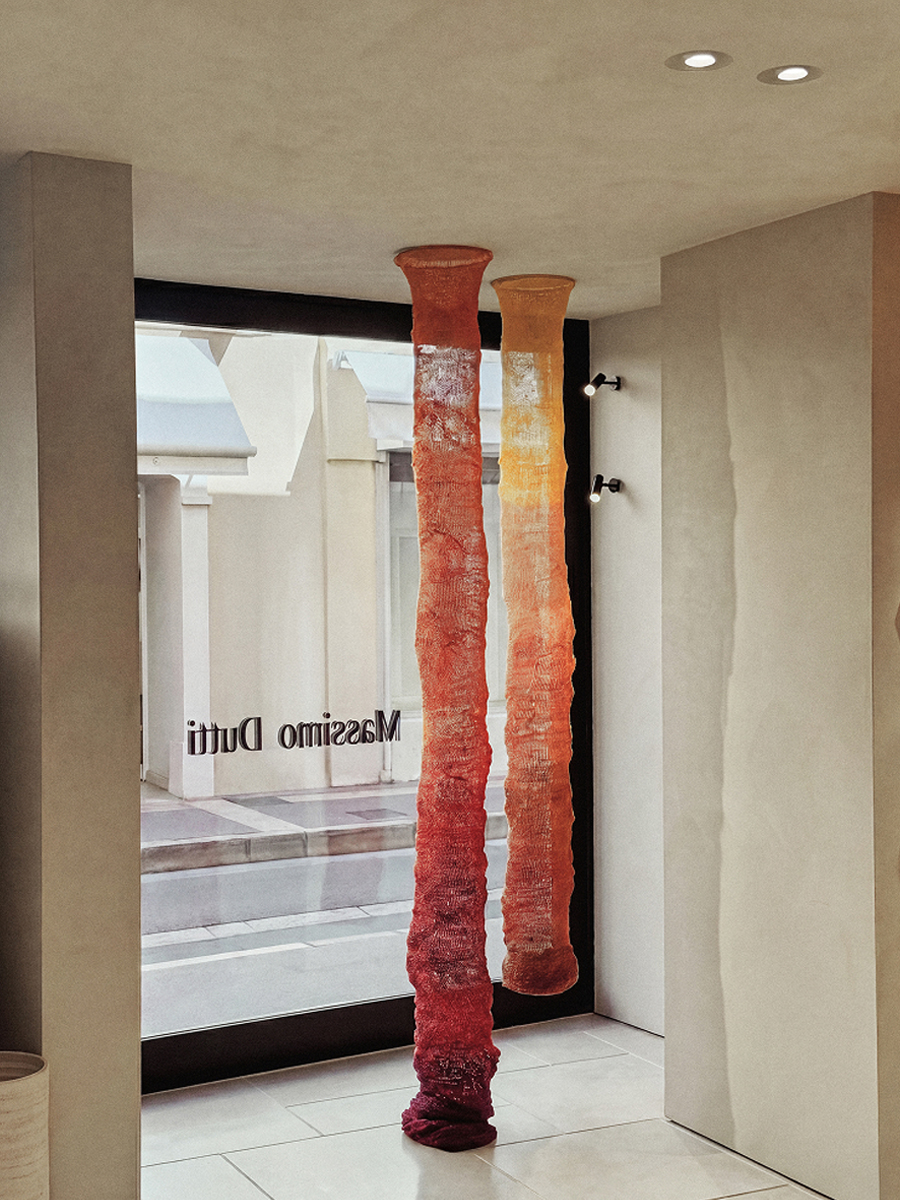
“In its seasonal Saint-Tropez space, Massimo Dutti presents the work of Luz Moreno Pinart, transforming the store into an immersive experience where contemporary art and fashion converge.”
St Tropez Pop-Up
This summer, Massimo Dutti’s seasonal store in Saint-Tropez reaffirms its role as a space where art, design and a sense of place come together in natural harmony. Since June 19, the brand has presented a new edition of Art in Progress in collaboration with artist Luz Moreno Pinart, whose intervention transforms both the storefront and the terrace, integrating contemporary artistic creation into the boutique experience while reinforcing its cultural dimension.
As part of the initiative, during the presentation the artist created a series of lavender-inspired pieces live, inviting visitors to discover the creative process in real time and establish a closer connection with the work. This activation marked the beginning of an artistic installation that will remain on display for one month, enriching the store’s visual narrative and creating an ongoing dialogue between the artwork, the architecture of the space and the season’s collections.
All of this unfolds within an environment shaped by Massimo Dutti’s architectural language, where noble materials, warm lighting and carefully curated textures create a serene and sophisticated atmosphere, reflecting a contemporary vision of luxury, craftsmanship and aesthetic excellence.